
Log in
en
English
Русский
Español
Dansk
Türkçe
Bahasa Indonesia
Svenska
Deutsch
Nederlands
Українська
Português
Srpski i Crnogorski
Български
Magyar
Hrvatski
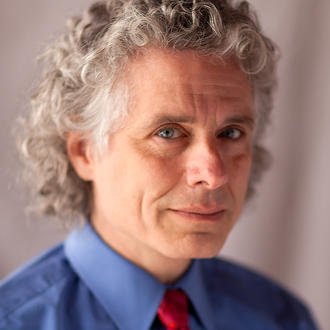
Steven Arthur Pinker is a prominent Canadian-American experimental psychologist, cognitive scientist, and author of popular science. Pinker is known for his wide-ranging advocacy of evolutionary psychology and the computational theory of mind.
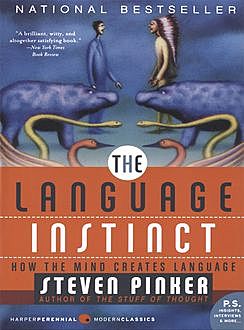
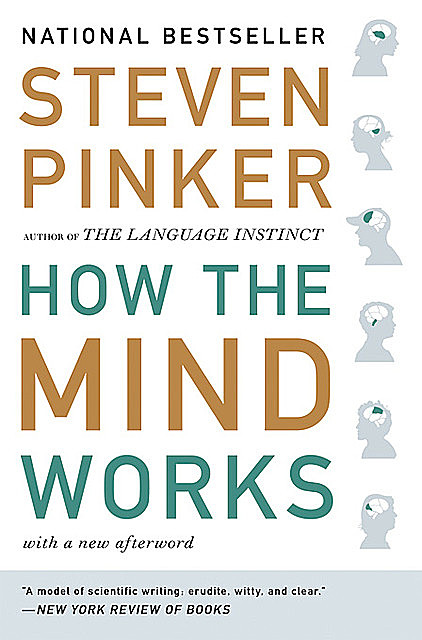
He conducts research on language and cognition, writes for publications such as the New York Times, Time, and The New Republic, and is the author of seven books, including The Language Instinct, How the Mind Works, Words and Rules, The Blank Slate, and most recently, The Stuff of Thought: Language as a Window into Human Nature.
He was born in Canada and graduated from Montreal's Dawson College in 1973. He received a bachelor's degree in experimental psychology from McGill University in 1976, and then went on to earn his doctorate in the same discipline at Harvard in 1979. He did research at the Massachusetts Institute of Technology (MIT) for a year, then became an assistant professor at Harvard and then Stanford University.
From 1982 until 2003, Pinker taught at the Department of Brain and Cognitive Sciences at MIT, and eventually became the director of the Center for Cognitive Neuroscience. (Except for a one-year sabbatical at the University of California, Santa Barbara in 1995–6.) As of 2008, he is the Johnstone Family Professor of Psychology at Harvard.
Pinker was named one of Time Magazine's 100 most influential people in the world in 2004 and one of Prospect and Foreign Policy's 100 top public intellectuals in 2005. He has also received honorary doctorates from the universities of Newcastle, Surrey, Tel Aviv, McGill, and the University of Tromsø, Norway.
He was twice a finalist for the Pulitzer Prize, in 1998 and 2003. In January 2005, Pinker defended Lawrence Summers, President of Harvard University, whose comments about the gender gap in mathematics and science angered much of the faculty.
On May 13th, 2006, Pinker received the American Humanist Association's Humanist of the Year award for his contributions to public understanding of human evolution.
In 2007, he was invited on The Colbert Report and asked under pressure, to sum up how the brain works in five words — Pinker answered "Brain cells fire in patterns."Pinker was born into the English-speaking Jewish community of Montreal. He has said, "I was never religious in the theological sense… I never outgrew my conversion to atheism at 13, but at various times was a serious cultural Jew."
As a teenager, he says he considered himself an anarchist until he witnessed civil unrest following a police strike in 1969. His father, a trained lawyer, first worked as a traveling salesman, while his mother was first a homemaker than a guidance counselor and high-school vice-principal. He has two younger siblings. His brother is a policy analyst for the Canadian government. His sister, Susan Pinker, is a school psychologist and writer, author of The Sexual Paradox.
Pinker married Nancy Etcoff in 1980 and they divorced in 1992; he married Ilavenil Subbiah in 1995 and they too divorced. His current wife is the novelist and philosopher Rebecca Goldstein. He has no children.
He is currently working on an upcoming book about the evolution of human morality, specifically focusing on "the historical decline of violence and its psychological roots" as stated by the author himself on the Harvard website.
He conducts research on language and cognition, writes for publications such as the New York Times, Time, and The New Republic, and is the author of seven books, including The Language Instinct, How the Mind Works, Words and Rules, The Blank Slate, and most recently, The Stuff of Thought: Language as a Window into Human Nature.
He was born in Canada and graduated from Montreal's Dawson College in 1973. He received a bachelor's degree in experimental psychology from McGill University in 1976, and then went on to earn his doctorate in the same discipline at Harvard in 1979. He did research at the Massachusetts Institute of Technology (MIT) for a year, then became an assistant professor at Harvard and then Stanford University.
From 1982 until 2003, Pinker taught at the Department of Brain and Cognitive Sciences at MIT, and eventually became the director of the Center for Cognitive Neuroscience. (Except for a one-year sabbatical at the University of California, Santa Barbara in 1995–6.) As of 2008, he is the Johnstone Family Professor of Psychology at Harvard.
Pinker was named one of Time Magazine's 100 most influential people in the world in 2004 and one of Prospect and Foreign Policy's 100 top public intellectuals in 2005. He has also received honorary doctorates from the universities of Newcastle, Surrey, Tel Aviv, McGill, and the University of Tromsø, Norway.
He was twice a finalist for the Pulitzer Prize, in 1998 and 2003. In January 2005, Pinker defended Lawrence Summers, President of Harvard University, whose comments about the gender gap in mathematics and science angered much of the faculty.
On May 13th, 2006, Pinker received the American Humanist Association's Humanist of the Year award for his contributions to public understanding of human evolution.
In 2007, he was invited on The Colbert Report and asked under pressure, to sum up how the brain works in five words — Pinker answered "Brain cells fire in patterns."Pinker was born into the English-speaking Jewish community of Montreal. He has said, "I was never religious in the theological sense… I never outgrew my conversion to atheism at 13, but at various times was a serious cultural Jew."
As a teenager, he says he considered himself an anarchist until he witnessed civil unrest following a police strike in 1969. His father, a trained lawyer, first worked as a traveling salesman, while his mother was first a homemaker than a guidance counselor and high-school vice-principal. He has two younger siblings. His brother is a policy analyst for the Canadian government. His sister, Susan Pinker, is a school psychologist and writer, author of The Sexual Paradox.
Pinker married Nancy Etcoff in 1980 and they divorced in 1992; he married Ilavenil Subbiah in 1995 and they too divorced. His current wife is the novelist and philosopher Rebecca Goldstein. He has no children.
He is currently working on an upcoming book about the evolution of human morality, specifically focusing on "the historical decline of violence and its psychological roots" as stated by the author himself on the Harvard website.
years of life: 18 September 1954 – present
Books
- unavailable
- unavailable
- unavailable


Series
- 3.1K
- 537
- 1.1K
- 44
Aaswath Raman,Lauren Pharr,tobacco brown,Hugh Herr,Susan Emmett,Anushka Naiknaware,Gene Luen Yang,Wes Moore,Jeremy Forbes,Amy Edmondson,Emily Levine,Michael Hendryx,Michael Rain,Ingrid Lee,Yuval Noah Harari,Nighat Dad,Robert Neuwirth,Kate Raworth,Kirsty Duncan,WorkLife with Adam Grant,Erricka Bridgeford,LB Hannahs,Emily Nagoski,Rola Hallam,Sarah Murray,Kevin Breel,Priya Vulchi, Winona Guo,Rébecca Kleinberger,Frances Frei,Dylan Marron,Steven Pinker,Eric Berridge,Clemantine Wamariya,Tania Douglas,Glen Henry,John Amory,Laura L. Dunn,Tracee Ellis Ross,Gwynne Shotwell,Zachary R. Wood,Dayo Ogunyemi,Hannah Bürckstümmer,Diane Wolk-Rogers,Sarah Donnelly,Mark Tyndall,Robin Steinberg,Jaron Lanier,Nancy Rabalais,Lera Boroditsky,Yasin Kakande,Kasiva Mutua,Andrew Dent,Drew Philp,Malika Whitley,Raphael Arar,Judith Heumann,Danny Hillis,Jose Andres,Tara Houska,Matthias Müllenbeck,Soka Moses,Sally Kohn,Leo Igwe,Adong Judith,Irina Kareva,Chris Nowinski,Ndidi Nwuneli,Mennat El Ghalid,Christian Picciolini,Erica Stone,Vikram Sharma,Sophie Andrews,Eve Abrams,Isabel Wilkerson,Daniel Susskind,Simone Bianco, Tom Zimmerman,Musimbi Kanyoro,Bob Stein,Amishi Jha,Alvin Irby,Isabel Allende,Vittorio Loreto,Deanna Van Buren,Liz Ogbu,Naomi Klein,Minda Dentler,Marc Bamuthi Joseph,Hadi Eldebek,Siphumeze Khundayi, Tiffany Kagure Mugo,Dustin Schroeder,Kaustav Dey,Nilay Kulkarni,Bill Bernat,Ilona Stengel,Jason Shen,Felice Belle, Jennifer Murphy,Shameem Akhtar,Tanya Menon,Robert Hakiza,Wendy Suzuki,Dixon Chibanda,Walé Oyéjidé,Marco Alverà,Bhu Srinivasan,Tapiwa Chiwewe,Su Kahumbu,Karen Lloyd,Stuart Duncan,Valarie Kaur,John Cary,Laura Galante,Mohamad Jebara,Amit Kalra,Raymond Tang,Ellen Støkken Dahl, Nina Dølvik Brochmann,Susan David,Wendy Woods,Fredros Okumu,Peter Ouko,Danielle Wood,Bryan Stevenson,Azim Khamisa, Ples Felix,Mike Gil,Ruth Chang,Guy Winch,Amar Inamdar,Mwende "FreeQuency" Katwiwa,David Katz,Jon Ronson,Howard Stevenson,Jedidah Isler,Bill Gross,Celeste Headlee,Dave Isay,Margaret Mitchell,Zachariah Mampilly,Edsel Salvaña,Chimamanda Ngozi Adichie,Taiye Selasi,Julian Treasure,Andrés Ruzo,Elizabeth Gilbert,Robert Waldinger,Anjali Kumar,George Takei,Naoko Ishii,Malcolm Gladwell,Casey Gerald,Diana Nyad,Leila Takayama,Cleo Wade,AJ Jacobs,Tim Harford,Emilie Wapnick,Oskar Eustis,Brett Hennig,Chera Kowalski,Enric Sala,Yasmin Green,Olga Yurkova,Heidi M. Sosik,John Doerr,Sam Rodriques,Jason B. Rosenthal,Max Tegmark,Katlego Kolanyane-Kesupile,Giada Gerboni,Prosanta Chakrabarty,Frans de Waal,Poppy Crum,Essam Daod,Reed Hastings,James Bridle,Anna Rothschild,Vishaan Chakrabarti,Travis Rieder,Karen J. Meech,Ian Firth,Paul Rucker,Caroline Harper,Rodin Lyasoff,Penny Chisholm,Steve Boyes,Lindsay Malloy,Noah Feldman,Jennifer Wilcox,Jakob Magolan,Gary Liu,Dan Knights,Kola Masha,Dan Gibson,Elizabeth White,Dina Katabi,Robb Willer,Will Marshall,Rebeca Hwang,Mikhail Zygar,Kashmir Hill, Surya Mattu,Stephen Webb,Tamekia MizLadi Smith,Lucy Marcil,Christina Wallace,Pratik Shah,Manoush Zomorodi,Bronwyn King,Luvvie Ajayi,Theo E.J. Wilson,Emily Smith,Elif Shafak,Justin Baldoni,Marily Oppezzo,David Casarett,OluTimehin Adegbeye,Kai-Fu Lee,Tina Seelig,Sydney Chaffee,Mary Maker,Hasini Jayatilaka,DK Osseo-Asare,Walter Hood,Chetna Gala Sinha,Jessica Pryce,Stephen DeBerry,Leticia Gasca,Janet Stovall,Grady Booch,Dread Scott,Burçin Mutlu-Pakdil,Angel Hsu,Alexandra Sacks,Halima Aden,Tammy Lally,Courtney Martin,Steve McCarroll,Fred Krupp,Nikki Clifton,Mark Pollock, Simone George,Andrew Bastawrous,Pierre Barreau,Benedetta Berti,Will MacAskill,Luhan Yang,Ghada Wali,Tom Griffiths,Simona Francese,Kate Stone,Sian Beilock,Niels van Namen,Chip Colwell,Kaitlyn Sadtler,Catherine Mohr,Megan Phelps-Roper,Tracie Keesee,Kym Worthy,Elizabeth Cawein,Adam Galinsky,Liv Boeree,Kristie Overstreet,DeAndrea Salvador,Ben Cort,Christine Porath,Melinda Epler,Michel Dugon,Alex Honnold,David Korins,Ashwini Anburajan,Rebecca Onie,Conley Chip,Kelly Richmond Pope,David Lang,Faith Osier,Kate Darling,Johan Rockström,Daniel Kraft,Matt Russo,Vinay Shandal,Wanis Kabbaj,Darieth Chisolm,Henrietta Fore,Elizabeth Streb,Charles Mann,David Deutsch,Rachel Wurzman,Graham Allison,Bryn Freedman, Fadi Chehadé,Finn Lützow-Holm Myrstad,Dolly Chugh,Julia Shaw,Sam Harris,Suzie Sheehy,Özlem Cekic,Michael Green,Tamas Kocsis,Dalia Mogahed,Alex Edmans,Teresa Bejan,Dawn Wacek,Alexander Belcredi,Julia Dhar,Sebastien de Halleux,Aparna Mehta,The TED Interview,Floyd E. Romesberg,Nita Farahany,Chad Frischmann,Gabby Rivera,Tarana Burke,Mellody Hobson,Chieh Huang,Stacey Abrams,Erez Yoeli,Ray Kurzweil,Ai-jen Poo,Alan Crickmore,J. Marshall Shepherd,Nadjia Yousif,Carla Harris,Douglas Rushkoff,Katharine Hayhoe,Daniel Kahneman,Darrick Hamilton,Eldra Jackson,Sir Ken Robinson,Dana Kanze,Ariana Curtis,Lisa Barrett,Jan Rader,ELIZABETH LYLE,Lýdia Machová,Jonathan Williams, Paula Stone Williams,Chiki Sarkar,Martin Danoesastro,Renzo Vitale,Karissa Sanbonmatsu,Shohini Ghose,George Blair-West,Monique W. Morris,Katharine Wilkinson,Akash Manoj,Cecile Richards,Kotchakorn Voraakhom,Tiana Epps-Johnson,Soraya Chemaly,Sean Davis,Greta Thunberg,Marian Wright Edelman,Leland Melvin,Emily Quinn,Ruby Sales,Matt Beane,Sarah Barmak,Danielle R. Moss,Julian Burschka,J.D. Vance,Shad Begum,P.J. Parmar,Mathias Basner,Steven Petrow,Lili Haydn,Aja Monet, phillip agnew,Juan Enriquez,Doris Kearns Goodwin,Bryn Freedman, Roy Bahat,Liz Kleinrock,Jeanne Pinder,Ashweetha Shetty,Dolores Huerta,Ronald Rael,Lindy Lou Isonhood,Karl Skjonnemand,Farida Nabourema,Juliet Brophy,Majd Mashharawi,César Hidalgo,Dina Zielinski,T. Morgan Dixon, Vanessa Garrison,Yvonne van Amerongen,Sarah T. Stewart,Thomas Curran,Kriti Sharma,Phil Plait,Leila Hoteit,Noah Wilson-Rich,Olympia Della Flora,Anne Lamott,Adam Grant,Rebecca Brachman,Fatima AlZahra'a Alatraktchi,Samy Nour Younes,Chuck Murry,Alexander Macdonald,Kimberly Noble,Muhammed Idris,Rosalind Picard,Eve Pearlman,Nora McInerny,Keith Kirkland,Kashfia Rahman,Rana Abdelhamid,Kakenya Ntaiya,Carole Cadwalladr,Jack Dorsey,Danielle N. Lee,Romain Lacombe,Leah Georges,David R. Liu,Kim Gorgens,Elizabeth Dunn,Hannah Gadsby,Yana Buhrer Tavanier,Michele Wucker,Joanne Chory,Per Espen Stoknes,Eric Liu,Bryn Freedman, Halla Tómasdóttir,Wajahat Ali,Sabine Doebel,Matt Walker,Giulia Enders,Sarah Kay,Suchitra Krishnan-Sarin,Katie Hood,Brittany Packnett,Bill Gates,Bruce Friedrich,Hamdi Ulukaya,America Ferrera,Jarrell Daniels,Morgan Vague,Baratunde Thurston,Erika Hamden,Reniqua Allen,Amanda Palmer,Tim Ferriss,David Brooks,Kate Bowler,Michelle Kuo,Juna Kollmeier,Mark Tercek,Priya Parker,Ryan Martin,Michael Tubbs,David Baker,Rob Reid,Suleika Jaouad,Susan Cain,Andrew McAfee,Lindsay Amer,Ethan Lindenberger,Heidi Grant,Jonny Sun,Jon Gray,Sylvia Earle,Moriba Jah,Julius Maada Bio,Bob Inglis,Natalie Fratto,Monica Lewinsky,Barbara J. King,Rick Doblin,Amy Padnani,Sharmeen Obaid-Chinoy,Ella Al-Shamahi,Melanie Nezer,Claudia Miner,Elizabeth Howell,Rahul Mehrotra,Hajer Sharief,Albert-Laszlo Barabasi,Tshering Tobgay,George Monbiot,Nicola Sturgeon,Ivonne Roman,Nanfu Wang,Margaret Heffernan,Johann Hari,Carol Fishman Cohen,Atul Gawande,Menno Schilthuizen,Elizabeth "Zibi" Turtle,David Epstein,Kristin Jones,Julieanna L. Richardson,Ali Noorani,Jane Zelikova,Gillian Tett,How to Be a Better Human,James Irungu Mwangi,Jennifer Heldmann,Ellen Trachman,J.R.,Charles C. Daniels,Gina Gutierrez,Ayana Elizabeth Johnson,Aarathi Krishnan,Kyra Gaunt,Cordae,Richard Craig,Vandana Singh,James Hodge,Agnes Larsson,Bryce Dallas Howard,Bruce Feiler,Tom Oxley,Bernhard Kowatsch,TED Health,Katherine Maher,Maria Popova,Margaret Levi,Alexis Nikole Nelson,Loretta Ross,Mary Ziegler,Erika Bachiochi,Joshua Prager,Dorie Clark,Ryah Whalen,Deepa Purushothaman,Marvin Rees,Ken Chenault,Bevy Smith,Adam Mosseri,Anushka Ratnayake,Body Stuff with Jen Gunter,Bektour Iskender,Resson Kantai Duff,Juliet Schor,Lucie Pinson,Sue Natali,Celina de Sola,Zoya Lytvyn,Shervin Khodabandeh,Amanda Renteria,Srishti Bakshi,Edith Elliott, Shahed Alam,Temie Giwa-Tubosun,Becca Heller,Nonette Royo,Allyson Felix,Becky Barker,Betül Kaçar,Melissa Moore,Rosanne Cash,Nat Keohane,Robin Hauser,Hyperink - Elon Musk Bio,Sam Afoullouss,Gabriel Kra,Jarrett J. Krosoczka,Garry Kasparov,Elizabeth Strickler,Alison Killing,Far Flung,Olivia Lazard,Olga Kitaina,Thomas Heatherwick,Michael Schur,Safi Rauf,Chanda Prescod-Weinstein,Zahra Biabani,Parag Khanna,Andrea Driessen,Jim VandeHei,Eleni Myrivili,Samir Ibrahim,Kristen Warren, MyVerse Warren,Catherine Price,Trish Millines Dziko,David Wengrow,Dan Widmaier,Scott Fitsimones,César Cuauhtémoc García Hernández,Reshma Saujani,Kiana Hayeri,Pico Iyer,Julie Lythcott-Haims,Jacqueline Woodson,Jen Gunter,Anil Seth,Maeve Higgins,Jacqueline Novogratz,Patricia Villarrubia-Gómez,Dallas Taylor,Peggy Shepard,Anicka Yi,Jeanette Winterson,Micaela Mantegna,Sergiu Pasca,Brooke Bennett,Miguel A. Modestino,Heejae Lim,Sheetal DeCaria,Ethan Hawke,Katherine Mangu-Ward,Wanuri Kahiu,Dean R. Lomax,Vaitea Cowan,Holly Herndon,Dominic Price,Albert Fox Cahn,Enzo Romero,Megan Reitz,R. Alan Brooks,Ryan Heffington,Isabelle Boemeke,ReThinking with Adam Grant,Sara Lomelin,Majora Carter,Anthony Fauci,Nicholas Leeper,Melodie Yashar,Andrew Ng,Okong'o Kinyanjui,Gloria Chan Packer,Bree Jones,Tameka Montgomery,Adjany Costa,Shankar Vedantam,Zineb Sqalli,Dan Harris,Meghan Hussey,Riley Moynes,Charlie Jane Anders,Karen Gurney,Noah Raford,June Sarpong,Jupta Itoewaki,Huma Yusuf,Shreya Joshi,Will Guidara,Rasmus Ankersen,Jane Fonda,Heidi Hammel, Nadia Drake,Jason Chin,Manish Bhardwaj,TED Countdown,Heidi Sørensen,Robert Katzschmann,Matthew Garcia,Vanessa Nakate,Olivia Vinckier,Gitte Frederiksen,Fehinti Balogun,Kat Craig, Tamana Ayazi,Kate Fagan,Ralph Chami,Alan Jamieson,Georgette Bennett,Lindsey Schneider,Christiane Amanpour,Fallon Goodman,Gareth Thomas,Ryan Gersava,Tessa Khan,Yongey Mingyur Rinpoche,Gautam Shah,Nithya Vaduganathan,Xavier Cortada,Angélique Kidjo, Femi Oke,Frances S. Chance,Joel Baraka,Clive Loseby,Adetayo Bamiduro,Jesse Ilhardt,After Hours,TED Business,Outrage + Optimism,Alyssa-Amor Gibbons,KC Davis,Paul Catchlove,Colin Averill,Jessie Christiansen,Ben Gran,Manu Peni,Miguel Goncalves,Clementine Jacoby,Amanda Gorman,Mariam Veiszadeh,Anil Ananthaswamy,Aaron Bastani,Constance Hockaday,Aparna Bharadwaj,Melaku Belay,Jing Corpuz,Lam Ho,Luisa Neubauer,Channing Gerard Joseph,Marisa G. Franco,David Andrew Quist,Tolu Oyekan,Timothy Snyder,Good Sport,Lisa Damour,Shannon Odell,Mesmin Destin,Ksenia Petrichenko,Kristen Nguyen,Jan Wurzbacher,Ayelet Fishbach,Tessa Clarke,Vincent Yeow Lim,Kate Ackerman,Saad Bhamla,Tiffani Ashley Bell,Gala Jackson,Michael Middlebrooks,Rebekah Shirley,Kris Alexander,Phnam Bagley,Rob Cross,Ordinary Things,Nedra Glover Tawwab,Paul Bloom,Jerome Hunter,Emily Grubert,John Paget,Alexandra Horowitz,Dan Shipper,Steven Nelson,Alona Fyshe,Kate Kahle,TED Radio Hour,Ramez Naam,Marcos Salazar,Alex Koster,Tina Yong,Lindsey A. Sherrill,Alysa McCall,Tsedal Neeley,Kenneth Chabert,Dave Sivaprasad,Tiffany Yu,Greg Brockman,Jiaying Zhao,Shou Chew,Nadya Tolokonnikova,Damon Gameau,Yejin Choi,Sal Khan,Yuko Munakata,J Mase III,Keenan Scott II,Golshifteh Farahani,Afrika Afeni Mills,Imran Chaudhri,Sheena Meade,Azim Shariff,Gary Marcus,Keyu Jin,Veronica Chau,Andy Dunn,Cecilia M. Orphan,Tom Graham,Wangechi Mutu,Gus Worland,Normand Voyer,Sixto Cancel,Martin Lockley,Anne Morriss,Julián Delgado Lopera,Punya Mishra,David Howard,Ali Hajimiri,Lonneke Gordijn,Tony Long,Mark Edwards,Jessie Reyez,Ian Bremmer,Cohen Bradley,Mena Fombo,Karlos Hill, Soraya Field Fiorio,Richard Reeves,Sheryl Lee Ralph,Angus Hervey,Sahar Zand,Rainn Wilson,Peter Singer,Conor Russomanno,Rebecca Darwent,Machine Dazzle,Jioji Ravulo,Johann Daniel Harnoss,Shane Campbell-Staton,Alua Arthur,Angeline Murimirwa,Alexandr Wang,Eliezer Yudkowsky,Maxim Timchenko,Anika Goss,Nicole Rycroft,Karen Bakker,Mark Mortensen,George T. Whitesides,David Lammy, Justin J. Pearson,Wanjira Mathai,The Redemption of Jar Jar Binks,Maya Shankar,Garry Cooper,Steve Presley,andrew leland,Vinu Daniel,Misan Harriman,Lucas Rizzotto,Simon Stiell,Michael Sheen,Al Gore,Eileen Isagon Skyers,Sandersan Onie,Barbara F. Walter,Terry Moore,Avinash Persaud,Yvonne Newbold,Olivia Breese,Ersin Han Ersin,Refik Anadol,Stuart Kauffman,Yat Siu,Morten Bo Christiansen,Bo Cerup-Simonsen,Bilawal Sidhu,Karen Willcox,Amy Baxter,Emmanuel Acho,Bob Wiltfong,K Allado-McDowell,Sarah Aviram,Peter McIndoe,Becky Kennedy,Natalie Cargill,Al Roker,Changhua Wu,Rebecca Collyer,Sims Witherspoon,Josephine Philips,Hannah Ritchie,Melissa Villaseñor,Jennifer Doudna,Robin Buckley,Anna Greka,Ramón Méndez Galain,Jennifer D. Sciubba,Jordan Dinwiddie,Tavares Strachan,Amy Powney,Carlos Rodríguez-Pastor,Nicos Marcou,Krista Tippett,Asmeret Asefaw Berhe,Dasha Navalnaya,Piyachart Phiromswad,Aisha Nyandoro,Payton M. Wilkins,Fixable,Gabrielle Novacek,Sarah Jones,Annie Rauwerda,Oleksandra Matviichuk,Jessica Whitaker Allen, Jim Whitaker,Luis von Ahn,David Burkus,Lucy McBath,Roy Wood Jr.,David McWilliams,Sasha Luccioni,Paul Hawken,Emma Nehrenheim,Ruha Benjamin,Doris Mitsch,Anna Maria Coclite,Irina Karamanos Adrian,Gopal D. Patel,Kala Constantino,Donnel Baird,Salvatore Cali,Coleman Hughes,Cynthia Williams,Stephen Wolfram,Marcelo Mena,Katie Fahey,Ilya Sutskever,Kevin H. Gary,Robin Kramer,Charles M. Blow,Jane Ferguson,Steve Long,Julio Friedmann,Keely Muscatell,David Blood, Nili Gilbert,Lindiwe Mazibuko,Neil Vora,Maira Kalman,Jessica Apotheker,Nicole Byers,Benjamin Zander,Chris Anderson, Shane Legg,Cedrik Neike,Asha Curran,Yordanos Eyoel,Kathryn Mannix,Cathie Wood,Glenn Close,Beth Viner,Sam Gregory,Am I Normal? with Mona Chalabi,Design Matters with Debbie Millman,Crispin Thurlow,Liana Finck,Rosita Najmi,Rob Toews,Newsha Ghaeli,Adriann Negreros,Rich Powell,Tao Zhang,Chris Anderson,Diana Greene Foster,Tessza Udvarhelyi,Yara Shahidi,Sylvester Chauke,Golriz Lucina,Ava DuVernay,Tara Boroushaki,Isabella Kirkland,Kathleen McAuliffe,Sofia Ongele,Melonie D. Parker,John O'Donnell,Hani Goodarzi,Gary Barker,Lindsay Levin, Paul Hudson,Laprisha Berry Daniels,Shari Liu,Laetitia Ky,Francesca Hogi,Sarah Longwell,John Mullins,Jonathan Foley,Alex Smith,Maryam Banikarim,Zainab Usman,Paige Alexander,Olesya Khromeychuk,Ali Abu Awwad, Ami Dar,Amir Nizar Zuabi,Slava Balbek,Susan Lozier,Christy L. Haynes,Chris Anderson, Richard Saul Wurman,Christine Schuler Deschryver,Far Flung with Saleem Reshamwala,Ryan Pullen,Ludmila Rattis,Karinna Grant,Leili Anvar,Divya Siddarth,Tanishia Lavette Williams,Esha Chhabra,Clint Brewer, Samar Ali,Shruthi Baskaran-Makanju,Mary Ann Sieghart,Kim Scott,Alex Keshavarzi,Ashif Shaikh,Lindsay Morris, Reed J. Williams,Tombo Banda,Abbas Ardehali,Chantale Zuzi Leader,Mike Posner,Madison Mohns,Diarra Bousso,Daniella Ballou-Aares,Amber Cabral,Ken Goldberg,Rebecca McMackin,Philipp Carlsson-Szlezak,Xiaojun "Tom" Wang,Jordan Klepper,Amane Dannouni, Anthony Tan,Sarah Edmondson,Catalina Lotero,Maria Sophocles,Dyhia Belhabib,Tracie Revis,Desiree Akhavan,Chris Anderson, Monique Ruff-Bell,Hanjo Seibert,Aziz Abu Sarah, Maoz Inon,Gabriel Marmentini,Daniela Rus,Jen Walsh,Mustafa Suleyman,Kelly Parker,Niceaunties,Oral McGuire,Pete Stavros,Louise Mabulo,Demis Hassabis,Bonnie Hancock,Helen Toner,Scott Galloway,Ryan Panchadsaram,Anjali Grover, David Biello,Randy Seriguchi Jr.,Andrew Yang,Jason Rugolo,Sarah J. Doherty,Meryam Sugulle,Bill Ackman,Daniel Lubetzky,Fei-Fei Li,Saket Soni,Christi Gendron,Annalee Newitz,TED Tech,Wan Faridah Akmal Jusoh,Fatma Karume,Thomas Dohmke,Martin Gutmann,Tessa West,Bari Weiss,Sonia Vallabh,Sagar Goel,Baratunde Thurston, adrienne maree brown,The TED AI Show,Rumman Chowdhury,Chezare A. Warren,Aruna Rangachar Pohl,Freada Kapor Klein,Yoram Yovell,Vinod Khosla,John Gottman, Julie Gottman,Kylan Gibbs,Kasia Chmielinski,Paolo Gaudiano,Adam Whybrew,Ian Bassin,Kelly Corrigan,Marcus Samuelsson,Uma Valeti,Justin Trudeau,David Friedberg,Alex Luebke,Vivek Kumbhari,Yvette Cabrera,Dorcas Naishorua,Storybook Maze,Geena Rocero,Catie Cuan,David Kwong,Bret Stephens, Yordanos Eyoel,Benjamin Lewis,Laurel Braitman,Anima Anandkumar,Saleem Ali,Kesha,Isaac Saul,Gerardo Reyes Chávez, Jon Esformes,Avi Loeb,Hartmut Neven,RuPaul Charles,Michael Timms,Lear deBessonet with Brian Stokes Mitchell,Lambers Fisher,Millie Chu Baird,Bel Trew,Doris Sung,Tammy Ma,Guo-Qiang Cai,Marion Campan,Nathaniel Stinnett,Valerie Rice,Armand D'Angour,Aline Sousa,Spencer J. Cox,Jerusalem Youth Chorus,Peace Itimi,Mohan Sivaloganathan,Willie Williams,Andrew Miki,Victor Ochen,Jay Bailey,Sheila Ngozi Oparaocha,Abdoulaye Diabaté,Gabrielle Rifkind,Agnes Kalibata,Anjan Sundaram,Saamra Mekuria-Grillo,Jonathan Haidt,Henna Pryor,Deb Chachra,Farhad Mohit,Carole Hooven,Zeynep Ton,Anil Seth, Yara Shahidi,Alex Carter,Kenneth C. Davis,Dana Gunders,David Finnigan,Amir Nizar Zuabi, Kristine McDivitt Tompkins,Chris Duffy,Wang Sam,Rory Stewart,Eli Pariser,Anthony Myint,Brian S. Lowery, Kylan Gibbs,Brian Lowery,Sara Giusto,Amy Kurzweil,Glen J. Golden,Kristine McDivitt Tompkins,Jon Kung, Uma Valeti,TED Talks Daily,Akshat Rathi,Nicky Trevorrow,Hiroki Koga,Pau Aleikum Garcia,Annabel Spring, Wendy Suzuki,Bilawal Sidhu, Ian Bremmer,Kevin Owocki,Reggie Watts,Mark Abraham,Sarah Lake,Philip Johns,Mark Grimmer,Nour E. Rawafi,Jaime Rojo,Gabe Brown,Peter Pomerantsev,Joel Bervell,Giorgia Lupi,Felipe Sánchez Luna,Gaya Herrington,Jon M. Chu,Cliff Kapono, Keolu Fox,Franziska Trautmann,Gonzalo Muñoz,Ramin Hasani,Daniel Hallak,Eric Nuzum,Daro Sulakauri,Elle Cordova,Nikolaus S. Lang,Leopoldo Lopez,Lawrence Lessig,Joon Silverstein,Ketakandriana Rafitoson,Teri Hofford,Hrund Gunnsteinsdóttir,Rhaina Cohen,Royal Ramey,Neeraj Aggarwal,Karthik Muralidharan,Sam Kass,Katsuhiko Hayashi,Dave Raggio,Dana R. Fisher,Stephanie R. Yates-Anyabwile,Helianti Hilman,Jennifer Golbeck,Snow Raven,Scott Shigeoka,June Lee,Scarlet Keys,Molly Graham,Max Jaderberg,Lily Yeh,Vidhya Ramalingam,Cara Hunter,Lawrence Bernstein,Chris Byrne,Norah Magero,Adam Kucharski
TED Talks Daily

Neil deGrasse Tyson,Kareem Abdul-Jabbar,Michael Cooper,Chuck Nice,Gary O'Reilly,Jamaal Wilkes,Ellen Cohn,Mitchell Kramer,Staci Gruber,Heather Berlin,Leonard Marshall,Lori Garver,Brian Keating,Matt Kirshen,Sarah White-Springer,Tim McMahon,Franklin Damann,Eugene Mirman,Kevin Hand,John Mulaney,Ellie Kemper,Julie Huber,Jessica Hernandez,Marcia Belsky,Brian Cox,Charles Liu,Katharine Hayhoe,Alie Ward,Dave Alciatore,Dan Harris,Dylan Thuras,Matt Ginsberg,Katherine Calvin,Danni Washington,Kennda Lynch,LeVar Burton,Leland Melvin,Sheyna Gifford,Laurie Winkless,Benjamin Brillat,Sandra Johnson,Janna Levin,William Shatner,Paul Mecurio,Hakeem Oluseyi,Adam McKay,Amy Mainzer,George Yancopoulos,Nicholas Christakis,Kate Biberdorf,Nick Bostrom,Peter Veals,Twila Moon,Patricia Cornwell,Jonathan Hayes,Negin Farsad,Annette Lee,Kevin R. Stone,Jordan Klepper,Mathias Clasen,Nathaniel Kahn,Natalie Batalha,Brendan Hunt,Jason Sudeikis,Natalie Starkey,Brawley “Cheese” Chisholm III,Jahmani “Hot Shot” Swanson,Arielle Johnson,Grace Douglas,Alton Brown,Jud Ready,Ray Billings,Chris Mason,Sian Proctor,Nicole Stott,Angela Duckworth,Eli Manning,Mary Roach,Moriba Jah,DeAnna Burt,Jerry Rice,Lindsey Vonn,Tony Gonzalez,Joey Brezinski,Shawn Green,Ana Diaz Artiles,Anna-Lisa Paul,Robert Ferl,Ricky Williams,Gavin Schmidt,Ann Druyan,Brian Toon,Aniket Sidhaye,Anne Rimoin,Steve Wozniak,Danielle Wood,Matt Winning,Jenna Tiwana,Kimberly Chapelle,Kate Marvel,Micheal DiTullo,Jason Hanft,Sandy Brown,Keri Cahoy,Sean Carroll,Bud Cooper,Radley Horton,Sabine Hossenfelder,Cynthia Chestek,Parag Patil,Conny Aerts,StarTalk Radio,Marina Brozovic,George Mashour,David Andrijevic,Michael Shermer,Robert Shepherd,Ilayda Samilgil,Steve “Steve-O” Glover,Yuval Noah Harari,Irwin Redlener,Ray Kurzweil,Semyon Dukach,Moiya McTier,John Goff,Brian Greene,Laurie Leshin,Joseph Gordon Levitt,Bruno Van Wonterghem,David Grinspoon,Delilah Gates,Jason Fenske,Wendy Freedman,Stuart Kim,Kimberly Arcand,Stephon Alexander,Peter Attia,Ariel Ekblaw,Greg Gbur,Dale Earnhardt Jr,Diandra Leslie-Pelecky,David Kipping,Michio Kaku,Jenny Greene,Nick Tiller,Teimojin Tan,Matt O'Dowd,Aomawa Shields,Kai Lenny,Carolyn Porco,Neil deGrase Tyson,Max Lugavere,David Spergel,Anna Lembke,Kai Bird,Jason Rhodes,Joe Rao,Babak Tafreshi,Bradley Mills,Anjali Tripathi,Matthew Walker,Lipi Roy,Nicholas Meyer,Lawrence Lasker,Walter Parkes,Edwin Moses,Linda Malkas,Rick Doblin,David Reichmuth,Mae Jemison,Will Harris,Lauren Lyons,Gaurav Shah,Peter Hotez,Bryn Dentinger,Jonathan Goff,Chase Blackburn,Travis Beckum,Peter Diamandis,Dax Shepard,Rob Reiner,Kelly Clarkson,J.B. Smoove,Sway Calloway,Robert Sapolsky,Harrison Greenbaum,David Sinclair,Gary O’Reilly,Joe Patterson,Jennifer Holm,Larissa Rodrigues,Alan Stern,Jack White,Kevin Hart,Tommy James,Nikki Glaser,Cam Johnson,Emily Rice,Ben Rein,Tiffany Haddish,Helene Langevin,Adam Savage,Bill Nye,Lika Guhathakurta,Richard Dawkins,Brett Kagan,Katherine Freese,RoxRite,Nikita Ducarroz,Sarah Parcak,Steve Balbus,Andy Mummery,Ronke Olabisi,Matthew Travers,Bianca Jones Marlin,Kelly Haston,Ryan Sprenger,Grant Sanderson,Darryl Seligman,Levitin Daniel,Sara Walker,Karl Friston,David Chalmers,J. Richard Gott III,Terry Crews,Richard Spinrad,Alex Cosoi,Kip Thorne,Anthony Bourdain,Batya Friedman,Steve Omohundro,David Spergal,Rainer Weiss,Lawrence Fishburne,David Spiegel,Dava Sobel,Ron Howard,Harry Cliff,Anil Seth,Susana Martinez-Conde,Teller,Tim Paglione,Malcolm Gladwell,Kathryn Huff,Fatima Ebrahimi,Max Tegmark,Scott Kelly,Emeran Mayer,Rick Binzel,Nergis Mavalvala,Simon Gilroy,Holly Jean Buck,Daniele Visioni,Kate the Chemist,Sergiu Pasca,Sara Seager,Scott Kennedy,Morgan McSweeney,Max Jaderberg,Hasan Minhaj,Lara Anderson,Harleen Kaur,Elise Crull,James Kimmel Jr.,Michael Shara,Venki Ramakrishnan,Herman Pontzer,Željko Ivezić,Ross MacPhee,Raphaële Chappe,Kelly Fast,Jeff Goldblum,Jon Kosloski,David Krakauer,Jill Tarter,Jean Rémi-King,Kerstin Gopfrich,Kelly Holley-Bockelmann,Nataliya Kosmyna,Jeff Thornberg,Jonathan Haidt,Bogdan Botezatu,Jake Roper,Casey Dreier,Jim Gates,Adam Becker,Adam Riess,John Martinis,Dean Buonomano,Steven Pinker,Terence Tao,Pete Holmes,Sasheer Zamata,Erin MacDonald,David Saltzburg,Katherinie Freese,Matt Kaplan,Andy Weir,Harold Connolly Jr,Jessica Knurick,Charles Liui,Kevin Espiritu,Betül Kaçar,Conney Aerts,Jaron Lanier,Alex Honnold,David Koepp,Steven Spielberg,Donald Hoffman,Mordecai-Mark Mac Low,Matt Walker,Sean Hodgman,Michelle Thaller,Jessica Ware,David Eagleman,Gül Dölen
StarTalk Radio

Quotes

Language is not a protocol legislated by an authority but rather a wiki that pools the contributions of millions of writers and speakers, who ceaselessly bend the language to their needs and who inexorably age, die, and get replaced by their children, who adapt the language in their turn.
- Like
- Comment
- ShareFacebookTwitterCopy link
- Report this

Left-wing and right-wing political ideologies have themselves become secular religions, providing people with a community of like-minded brethren, a catechism of sacred beliefs, a well-populated demonology, and a beatific confidence in the righteousness of their cause.
- Like
- Comment
- ShareFacebookTwitterCopy link
- Report this
People are by nature illiterate and innumerate, quantifying the world by “one, two, many” and by rough guesstimates.21 They understand physical things as having hidden essences that obey the laws of sympathetic magic or voodoo rather than physics and biology: objects can reach across time and space to affect things that resemble them or that had been in contact with them in the past (remember the beliefs of pre–Scientific Revolution Englishmen).22 They think that words and thoughts can impinge on the physical world in prayers and curses. They underestimate the prevalence of coincidence.23 They generalize from paltry samples, namely their own experience, and they reason by stereotype, projecting the typical traits of a group onto any individual that belongs to it. They infer causation from correlation. They think holistically, in black and white, and physically, treating abstract networks as concrete stuff. They are not so much intuitive scientists as intuitive lawyers and politicians, marshaling evidence that confirms their convictions while dismissing evidence that contradicts them.24 They overestimate their own knowledge, understanding, rectitude, competence, and luck.25
- Like
- Comment
- ShareFacebookTwitterCopy link
- Report this
fb2epub
Drag & drop your files
(not more than 5 at once)