
Books
Read in our apps:
iOS
·Android
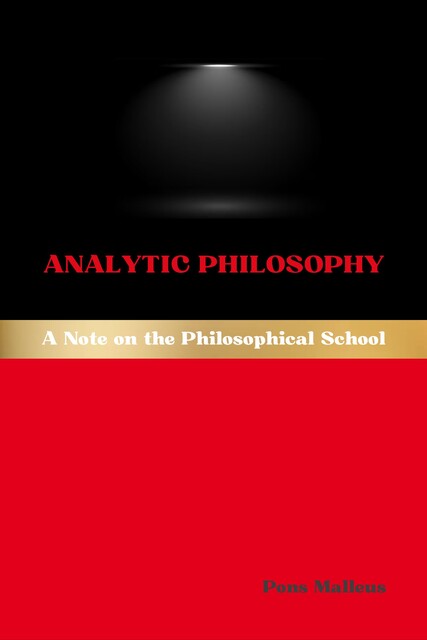
This book is an introduction to analytic philosophy—a school of thought that has shaped much of contemporary philosophy in the English-speaking world. Emerging in the early 20th century, analytic philosophy redefined the nature of philosophical inquiry by emphasizing clarity, logical rigor, and linguistic analysis. It distinguished itself from older metaphysical traditions and from the more historically and continentally rooted strands of philosophy by striving to make philosophical problems more tractable, if not always solvable, through careful reasoning and attention to language.
Analytic philosophy is not a unified doctrine. It does not rest on a single set of claims or a common body of conclusions. Instead, it is defined more by its method and temperament: a commitment to argument over rhetoric, to detail over grandeur, and to a disciplined use of language as the primary tool of philosophical investigation. As a result, analytic philosophy has tackled a wide array of subjects—logic, epistemology, philosophy of language, ethics, metaphysics, and philosophy of mind—with a level of precision that has become both its hallmark and its greatest source of criticism.
The origins of this movement can be traced to figures such as Gottlob Frege, Bertrand Russell, G.E. Moore, and Ludwig Wittgenstein, whose early 20th-century writings marked a radical departure from the dominant philosophical paradigms of their time. Frege’s innovations in logic and the philosophy of language laid the groundwork for a more rigorous treatment of meaning and reference. Russell’s clarity and systematic ambition brought new life to philosophical analysis, while Moore’s commonsense realism challenged idealism by demanding that philosophical language mirror ordinary usage. Wittgenstein, in both his early and later work, provided foundational critiques that shifted the course of the movement, influencing generations of thinkers.
This book does not attempt to canonize analytic philosophy or to present it as the only legitimate form of philosophical inquiry. Rather, it aims to offer a critical, accessible, and comprehensive guide to its central ideas, debates, and figures. It explores the internal evolution of the movement—from logical atomism and positivism to ordinary language philosophy and beyond—and it situates analytic thought in dialogue with other traditions, including Continental philosophy, pragmatism, and the natural sciences.
The analytic tradition, like all philosophical traditions, is dynamic. In recent decades, it has expanded in scope, becoming increasingly pluralistic. Topics once considered outside its purview—such as aesthetics, political theory, and feminist philosophy—have entered its discourse. At the same time, its practitioners continue to wrestle with questions about the role of intuition, the limits of language, and the relationship between philosophy and science.
This book is intended for both newcomers and those with a background in philosophy who seek a deeper understanding of the analytic tradition. Each chapter is structured to offer clear exposition alongside critical analysis, with an emphasis on how problems are framed and arguments constructed. Whether you are drawn to the logical elegance of early analytic thought or to its later attention to the messiness of ordinary language, the aim here is to foster engagement—not merely to inform, but to invite philosophical reflection in the analytic spirit.
In that spirit, this book does not offer final answers. Instead, it presents analytic philosophy as an ongoing conversation—one that continues to evolve, challenge, and provoke. To engage with this tradition is to participate in that conversation, and it is my hope that the pages ahead will provide both a map of where it has been and a prompt to consider where it might yet go.
Analytic philosophy is not a unified doctrine. It does not rest on a single set of claims or a common body of conclusions. Instead, it is defined more by its method and temperament: a commitment to argument over rhetoric, to detail over grandeur, and to a disciplined use of language as the primary tool of philosophical investigation. As a result, analytic philosophy has tackled a wide array of subjects—logic, epistemology, philosophy of language, ethics, metaphysics, and philosophy of mind—with a level of precision that has become both its hallmark and its greatest source of criticism.
The origins of this movement can be traced to figures such as Gottlob Frege, Bertrand Russell, G.E. Moore, and Ludwig Wittgenstein, whose early 20th-century writings marked a radical departure from the dominant philosophical paradigms of their time. Frege’s innovations in logic and the philosophy of language laid the groundwork for a more rigorous treatment of meaning and reference. Russell’s clarity and systematic ambition brought new life to philosophical analysis, while Moore’s commonsense realism challenged idealism by demanding that philosophical language mirror ordinary usage. Wittgenstein, in both his early and later work, provided foundational critiques that shifted the course of the movement, influencing generations of thinkers.
This book does not attempt to canonize analytic philosophy or to present it as the only legitimate form of philosophical inquiry. Rather, it aims to offer a critical, accessible, and comprehensive guide to its central ideas, debates, and figures. It explores the internal evolution of the movement—from logical atomism and positivism to ordinary language philosophy and beyond—and it situates analytic thought in dialogue with other traditions, including Continental philosophy, pragmatism, and the natural sciences.
The analytic tradition, like all philosophical traditions, is dynamic. In recent decades, it has expanded in scope, becoming increasingly pluralistic. Topics once considered outside its purview—such as aesthetics, political theory, and feminist philosophy—have entered its discourse. At the same time, its practitioners continue to wrestle with questions about the role of intuition, the limits of language, and the relationship between philosophy and science.
This book is intended for both newcomers and those with a background in philosophy who seek a deeper understanding of the analytic tradition. Each chapter is structured to offer clear exposition alongside critical analysis, with an emphasis on how problems are framed and arguments constructed. Whether you are drawn to the logical elegance of early analytic thought or to its later attention to the messiness of ordinary language, the aim here is to foster engagement—not merely to inform, but to invite philosophical reflection in the analytic spirit.
In that spirit, this book does not offer final answers. Instead, it presents analytic philosophy as an ongoing conversation—one that continues to evolve, challenge, and provoke. To engage with this tradition is to participate in that conversation, and it is my hope that the pages ahead will provide both a map of where it has been and a prompt to consider where it might yet go.
102 printed pages
- Original publication
- 2025
- Publication year
- 2025
- Publisher
- PublishDrive
Have you already read it? How did you like it?
👍👎
fb2epub
Drag & drop your files
(not more than 5 at once)