


en

Baek Se-hee

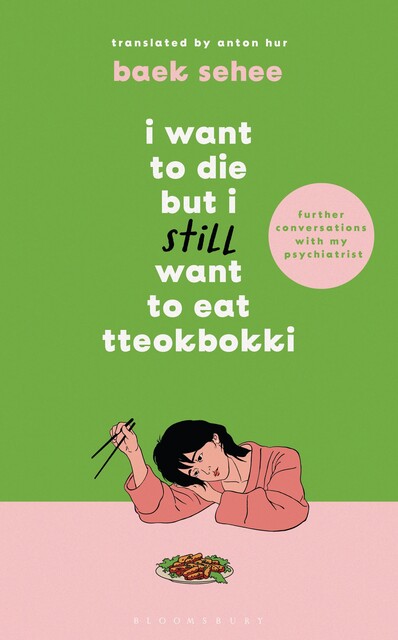
Baek Se-hee was a South Korean writer known for her memoirs about depression and therapy. She was best known for I Want to Die but I Want to Eat Tteokbokki (2018) and its sequel I Want to Die but I Still Want to Eat Tteokbokki (2019). Her work has sold more than one million copies worldwide and has been translated into over twenty-five languages. The first book received an English translation by Anton Hur in 2022 and became a bestseller in several countries.

Baek was born in 1990 in South Korea. She studied creative writing at university and worked for five years at a publishing house. She began psychiatric treatment in her twenties and continued it for ten years. The idea for her first book came after she published extracts from her therapy sessions on a blog. Readers responded strongly to her writing, encouraging her to develop the material into a book.

Her debut, I Want to Die but I Want to Eat Tteokbokki (2018), was first self-published and later issued by Munhakdongne. It presents twelve weeks of conversations between Baek and her psychiatrist. Between transcripts, she adds short reflective essays on self-hatred, comfort eating and the effort to live with dysthymia, a chronic form of depression.

The book’s title refers to tteokbokki, a spicy rice cake dish that represented her wish to live despite despair. In a 2023 interview with PEN, Baek said that “writing can help you see yourself from different angles” and “can be a way of regarding yourself three-dimensionally.”

The book sold approximately 600,000 copies in South Korea and over a million copies worldwide. It was translated into multiple languages, including English, Japanese, and German. The sequel, I Want to Die but I Still Want to Eat Tteokbokki (2019), continued the same structure and themes, focusing on recovery, self-harm and the long process of finding stability.

Bloomsbury, which published the English editions, described the books as an attempt to record her thoughts and conversations about mental illness “with precision and restraint.”

Following the success of her memoirs, Baek became an essential voice in discussions of mental health in South Korea. She gave interviews on the value of therapy and the need for open dialogue about depression. In one statement, she said she had “trouble finding the right theme” for her first book until she realised that “something I could write about with some authority was depression.”

Baek Se-hee died in 2025 at the age of 35. According to the Korean organ donation agency, she donated her heart, lungs, liver and kidneys, saving five lives. Her translator, Anton Hur, said that “she touched millions of lives more with her writing.” Her sister stated that Baek “wanted to write, to share her heart with others through her work, and to inspire hope.”

Photo credit: IG @_baeksehee
years of life: 25 February 1990 – 16 October 2025

Quotes

t2has quotedlast year
Just because you like one thing about a person, you don’t need to like everything about them. And just because you don’t like one thing about a person, it doesn’t mean the person as a whole isn’t worth your time.
t2has quotedlast year
To Not Depend on Dependence
t2has quotedlast year
For example, some people lose their first love and think, I’ll never find another person like them, but after a while, a new person takes their place. Think of yourself as entering a sea change in life, and choose things you haven’t chosen before – try to enter situations, even ones you know will end in failure, just to experience failure.

Impressions

Zeeshared an impression10 months ago
🔮Hidden Depths

I first DNF’ed this book in 2023 and returned to it in January 2026, with renewed hope it might resonate differently.

While parts of it did feel relatable, that connection struck me as surface level—like a universal experience rather than something deeply extricated. Upon further contemplation, this book left me unexpectedly frustrated at times. Baek Sehee’s therapeutic journey appears linear and straightforward, with insights arising quickly and resolutions feeling almost self-concluded, then futher affirmed by her psychiatrist with little resistance. In contrast, my own experiences with therapy feel far more tangled and nonlinear, which made the memoir difficult to connect with on a deeper level. I wholly recognise this to be a personal experience on my part.

I also found disconnect with her largely black-and-white outlook. Her thoughts and conclusions felt simplistic at times, whereas I tend to approach similar issues through a more grey lens. Some of her interpretive leaps were hard for me to follow, and I found myself questioning both her reasoning and my own tendency toward overcomplication. Perhaps that tension is part of the reading experience itself.

I do question the decision to market the book as “self-help” rather than as autobiography or memoir. Approaching it as guidance or for clinical insight may lead to disappointment for some. In hindsight, cultural context may also play a role and some ideas may have been lost in translation—given that it was originally written in Korean, differences in how mental health is discussed and framed could account for some of the tonal dissonance.

That said, this is an intensely personal memoir rooted in Baek Sehee’s own lived reality. I don’t dismiss her struggles, nor do I doubt the distress she experienced. The sessions recorded in this book is intimately attuned to her case and circumstances. We are merely observers.

Ultimately, the book felt to me as though it holds more cultural value than clinical profundity. Readers seeking a gentle, reflective memoir may find meaning in it, but those looking for more psychological insight may find it lacking.

  • unavailable
  • Dani CyCshared an impression5 months ago
    👍Worth reading

  • unavailable
  • fb2epub
    Drag & drop your files (not more than 5 at once)