
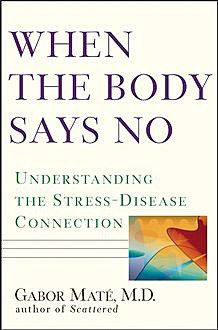
When the Body Says No
- dolcecoahas quoted4 years ago
 There are many hormones in the body, soluble chemicals that affect the functioning of organs, tissues and cells. When a chemical is secreted into the circulation by one organ to influence the functioning of another, it is called an endocrine hormone. On the perception of a threat, the hypothalamus in the brain stem releases corticotropin-releasing hormone (CRH), which travels a short distance to the pituitary, a small endocrine gland embedded in the bones at the base of the skull. Stimulated by CRH, the pituitary releases adrenocorticotrophic hormone (ACTH).
ACTH is in turn carried by the blood to the adrenals, small organs hidden in the fatty tissue on top of the kidneys. Here ACTH acts on the adrenal cortex, a thin rind of tissue that itself functions as an endocrine gland. Stimulated by ACTH, this gland now secretes the corticoid hormones (corticoid, from “cortex”), the chief among them being cortisol. Cortisol acts on almost every tissue in the body one way or another—from the brain to the immune system, from the bones to the intestines. It is an important part of the infinitely intricate system of physiological checks and balances by which the body mounts a response to threat. The immediate effects of cortisol are to dampen the stress reaction, decreasing immune activity to keep it within safe bounds.Proceso y consecuencias del estrés en el cuerpo
- b0144770490has quoted2 years ago
 Hans Selye in The Stress of Life
- Novem MWhas quoted2 years ago
 The idea that people’s emotional coping style can be a factor in scleroderma or other chronic conditions is anathema to some physicians.
- Danya Chaikelhas quoted3 years ago
 excess of painful, unmetabolized emotion.
- Danya Chaikelhas quoted3 years agolike laboratory animals unable to escape, people find themselves trapped in lifestyles and emotional patterns inimical to their health. The higher the level of economic development, it seems, the more anaesthetized we have become to our emotional realities. We no longer sense what is happening in our bodies and cannot therefore act in self-preserving ways. The physiology of stress eats away at our bodies not because it has outlived its usefulness but because we may no longer have the competence to recognize its signals.
- Visual Johnhas quoted3 years ago
 It was evident that he found the prospect of Alexa’s death unbearably frightening, and also that she appeared to deny the diagnosis m
- dolcecoahas quoted3 years agoHans Selye in The Stress of Life.1
- dolcecoahas quoted4 years agowe have lost touch with the gut feelings designed to be our warning system. The body mounts a stress response, but the mind is unaware of the threat. We keep ourselves in physiologically stressful situations, with only a dim awareness of distress or no awareness at all. As Selye pointed out, the salient stressors in the lives of most human beings today—at least in the industrialized world—are emotional. Just like laboratory animals unable to escape, people find themselves trapped in lifestyles and emotional patterns inimical to their health. The higher the level of economic development, it seems, the more anaesthetized we have become to our emotional realities. We no longer sense what is happening in our bodies and cannot therefore act in self-preserving ways. The physiology of stress eats away at our bodies not because it has outlived its usefulness but because we may no longer have the competence to recognize its signals
- dolcecoahas quoted4 years agoIn civilized society, however, the flight-fight reaction is triggered in situations where it is neither necessary nor helpful, since we no longer face the same mortal threats to existence. The body’s physiological stress mechanisms are often triggered inappropriately, leading to disease
- dolcecoahas quoted4 years agoBut the same stress responses, triggered chronically and without resolution, produce harm and even permanent damage. Chronically high cortisol levels destroy tissue. Chronically elevated adrenalin levels raise the blood pressure and damage the heart.
There is extensive documentation of the inhibiting effect of chronic stress on the immune system.
fb2epub
Drag & drop your files
(not more than 5 at once)