
Books
Read in our apps:
iOS
·Android
Benjamin Constant
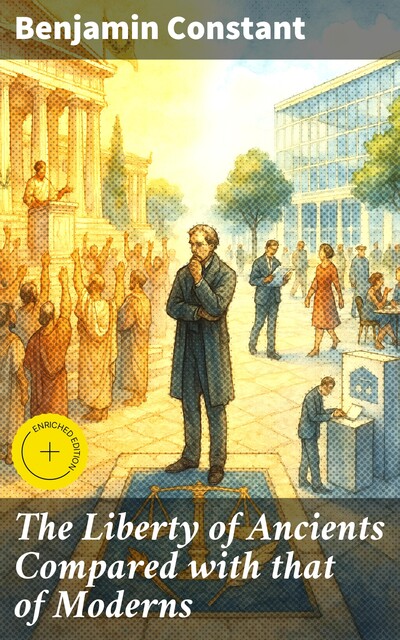
The Liberty of Ancients Compared with that of Moderns
In “The Liberty of Ancients Compared with that of Moderns,” Benjamin Constant presents a profound philosophical exploration of freedom, contrasting the collective liberty of ancient republics with the individual liberties cherished in modern society. Written in a concise yet elegant prose style, Constant utilizes a rich historical context, drawing comparisons from classical political theory while wrestling with the implications of Enlightenment thought. This pivotal work dissects the essence of liberty itself, arguing that modern liberty prioritizes individual rights over communal authority, thus reshaping the fabric of political discourse in the 19th century. Benjamin Constant, a prominent figure of the French Revolution and a political theorist, was greatly influenced by the tumult of his time, witnessing firsthand the tensions between liberty and authority. His experiences as a politician and his background in the philosophical currents of the Enlightenment led him to examine the nature of political freedom rigorously. Through his diverse intellectual engagements, Constant sought to reconcile the ideals of individual autonomy with social responsibility, paving the way for future debates about the nature of democracy. This essential text is highly recommended for readers interested in political philosophy and the historical evolution of liberty. Constant's nuanced arguments prompt critical reflection on modern democratic values, making it a significant work for scholars and general readers alike who wish to understand the foundations of contemporary political thought.
In this enriched edition, we have carefully created added value for your reading experience:
— A succinct Introduction situates the work's timeless appeal and themes.
— The Synopsis outlines the central plot, highlighting key developments without spoiling critical twists.
— A detailed Historical Context immerses you in the era's events and influences that shaped the writing.
— A thorough Analysis dissects symbols, motifs, and character arcs to unearth underlying meanings.
— Reflection questions prompt you to engage personally with the work's messages, connecting them to modern life.
— Hand‐picked Memorable Quotes shine a spotlight on moments of literary brilliance.
— Interactive footnotes clarify unusual references, historical allusions, and archaic phrases for an effortless, more informed read.
In this enriched edition, we have carefully created added value for your reading experience:
— A succinct Introduction situates the work's timeless appeal and themes.
— The Synopsis outlines the central plot, highlighting key developments without spoiling critical twists.
— A detailed Historical Context immerses you in the era's events and influences that shaped the writing.
— A thorough Analysis dissects symbols, motifs, and character arcs to unearth underlying meanings.
— Reflection questions prompt you to engage personally with the work's messages, connecting them to modern life.
— Hand‐picked Memorable Quotes shine a spotlight on moments of literary brilliance.
— Interactive footnotes clarify unusual references, historical allusions, and archaic phrases for an effortless, more informed read.
58 printed pages
- Copyright owner
- Bookwire
- Original publication
- 2020
- Publication year
- 2020
- Publisher
- Good Press
Have you already read it? How did you like it?
👍👎

fb2epub
Drag & drop your files
(not more than 5 at once)